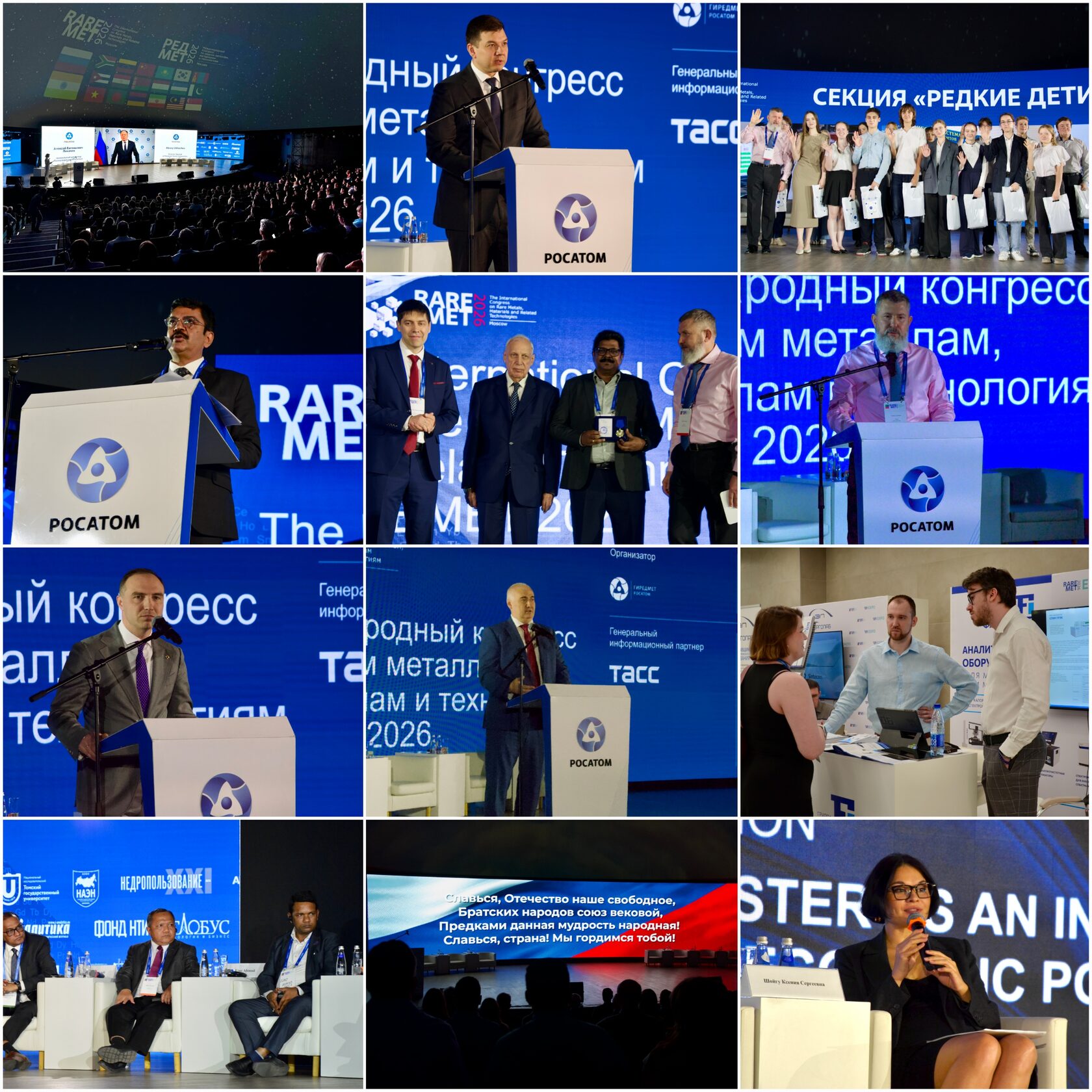
Ensuring technological sovereignty, international cooperation, technology exchange, and personnel training – the main topics of the scientific forum.
On May 20, 2026, the International Congress on Rare Metals, Materials, and Technologies «RAREMET-2026» (RAREMET-2026) opened in Moscow at RTU MIREA. The Congress is organized by JSC Giredmet (part of the Scientific Division of Rosatom State Atomic Energy Corporation).
On May 20, 2026, the International Congress on Rare Metals, Materials, and Technologies «RAREMET-2026» (RAREMET-2026) opened in Moscow at RTU MIREA. The Congress is organized by JSC Giredmet (part of the Scientific Division of Rosatom State Atomic Energy Corporation).
The largest industry platform brought together over 750 participants from 20 countries, including leading scientists, government officials, top management of industrial corporations and engineering companies. Delegates from Russia, India, China, Kazakhstan, Republic of Korea, Mongolia, Cuba, Egypt, Belarus, Tajikistan, Uzbekistan, Venezuela, Pakistan, Vietnam, Bangladesh, Armenia, Iran, Malaysia, Indonesia, Singapore, and the Republic of South Africa are taking part in the Congress. The largest foreign delegation comes from India (over 100 participants), including high-ranking representatives from the ministries of steel, electronics, and mining.
It is symbolic that just two days before the Congress, president Vladimir Putin discussed the development of the rare and rare earth metals industry with permanent members of the Russian Security Council. The president emphasized that this topic is important for the country’s technological sovereignty and national security. During the Congress opening ceremony, the same points were repeated many times by the participants.
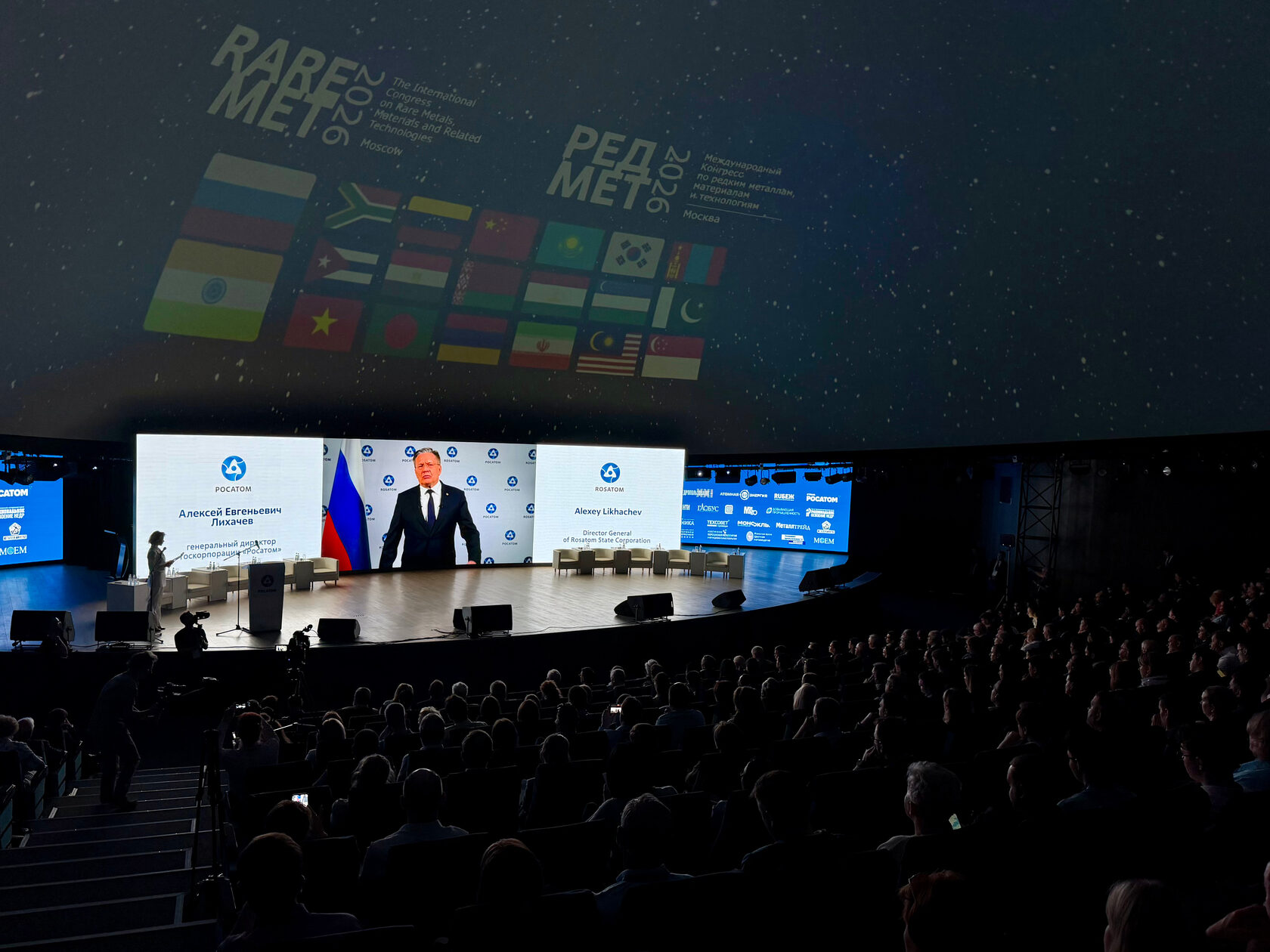
Alexey Likhachev, Director General of Rosatom State Atomic Energy Corporation, in his video address to the delegates of RAREMET-2026, spoke about the extensive work being done to develop the rare earth industry to ensure Russia’s technological sovereignty.
«The forum is organized by the Giredmet Institute, the flagship of the domestic rare metal industry. This year it celebrates its 95th anniversary. Rosatom is actively involved in the development of the rare earth industry in the country. We are restoring rare earth metal production at the Solikamsk Magnesium Plant. Modernizing the processing plant at the Lovozero Mining and Processing Plant. Creating a processing cluster in Yakutia. Very soon, the country’s first large-scale production of permanent rare earth magnets will begin operations in Glazov. We expect that our efforts will help achieve a strategic goal: to reduce our country’s dependence on rare earth metal exports and provide domestic industry with locally sourced resources».
It is symbolic that just two days before the Congress, president Vladimir Putin discussed the development of the rare and rare earth metals industry with permanent members of the Russian Security Council. The president emphasized that this topic is important for the country’s technological sovereignty and national security. During the Congress opening ceremony, the same points were repeated many times by the participants.
Alexey Likhachev, Director General of Rosatom State Atomic Energy Corporation, in his video address to the delegates of RAREMET-2026, spoke about the extensive work being done to develop the rare earth industry to ensure Russia’s technological sovereignty.
«The forum is organized by the Giredmet Institute, the flagship of the domestic rare metal industry. This year it celebrates its 95th anniversary. Rosatom is actively involved in the development of the rare earth industry in the country. We are restoring rare earth metal production at the Solikamsk Magnesium Plant. Modernizing the processing plant at the Lovozero Mining and Processing Plant. Creating a processing cluster in Yakutia. Very soon, the country’s first large-scale production of permanent rare earth magnets will begin operations in Glazov. We expect that our efforts will help achieve a strategic goal: to reduce our country’s dependence on rare earth metal exports and provide domestic industry with locally sourced resources».
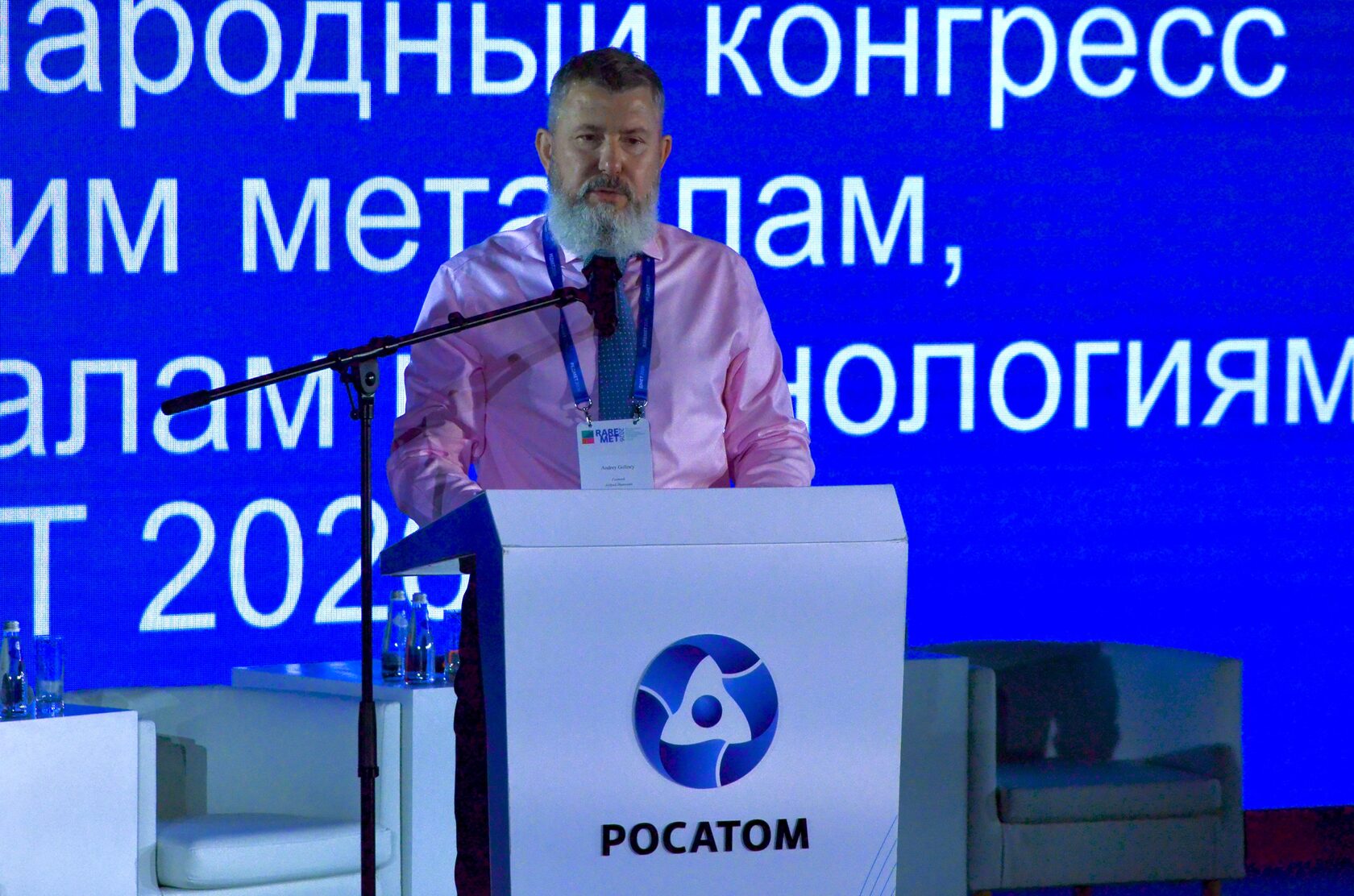
Andrey Goliney, Director of JSC Giredmet (the organizer of the Congress), highlighted the historical continuity of the Congress:
«The RAREMET‑2026 Congress is the successor to the series of scientific seminars «Sazhin Readings» and three international scientific and practical conferences, which addressed pressing issues in the development of the industry, identified prospects for its growth, and explored areas of application in related industrial sectors. Currently, the rare and rare earth metals industry is undergoing a global transformation that requires new approaches to developing strategic partnerships and international cooperation in the advancement of “closed-loop” technologies – from extraction, processing, and recovery to end products. The Congress is intended to become the premier platform for constructive dialogue between fundamental and applied science, government authorities, and the real economy sector on the most critical issues facing the rare earth industry».
«The RAREMET‑2026 Congress is the successor to the series of scientific seminars «Sazhin Readings» and three international scientific and practical conferences, which addressed pressing issues in the development of the industry, identified prospects for its growth, and explored areas of application in related industrial sectors. Currently, the rare and rare earth metals industry is undergoing a global transformation that requires new approaches to developing strategic partnerships and international cooperation in the advancement of “closed-loop” technologies – from extraction, processing, and recovery to end products. The Congress is intended to become the premier platform for constructive dialogue between fundamental and applied science, government authorities, and the real economy sector on the most critical issues facing the rare earth industry».
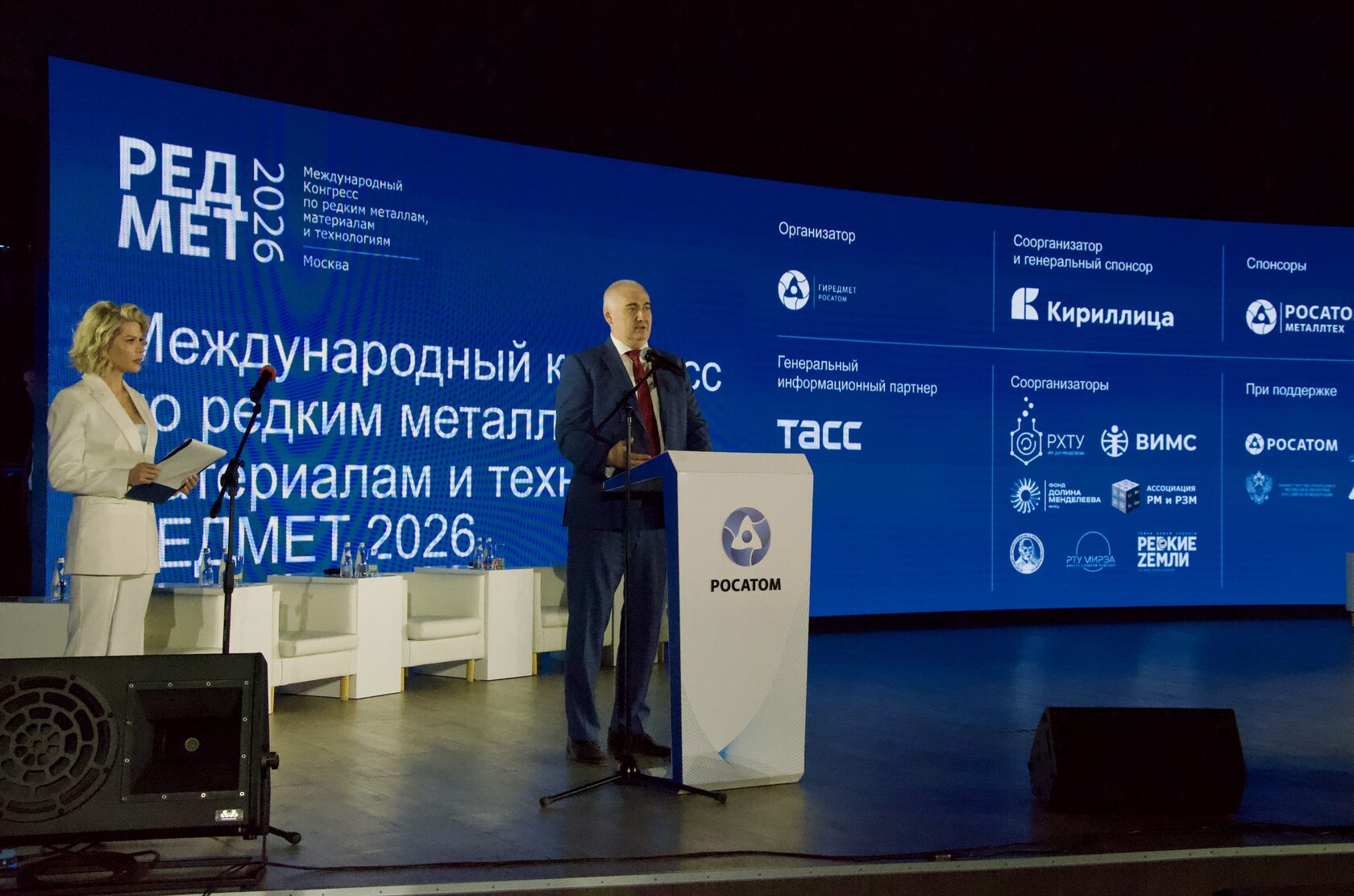
Stanislav Kudzh, Rector of RTU MIREA (co-organizer of the Congress), spoke about the university's role in the development of the industry:
«95 years ago, it was at our university that the first department of rare metals technology in Russia was established. Today, RTU MIREA is the only university that trains full-cycle engineers: from ore extraction to programming aircraft made from rare earth materials. We are the home of the Russian rare metal industry. And we are ready to train new personnel».
«95 years ago, it was at our university that the first department of rare metals technology in Russia was established. Today, RTU MIREA is the only university that trains full-cycle engineers: from ore extraction to programming aircraft made from rare earth materials. We are the home of the Russian rare metal industry. And we are ready to train new personnel».
Anton Basansky, State Secretary – Deputy Minister of the Russian Federation for the Development of the Far East and the Arctic, announced a new support mechanism for the rare earth industry:
«The majority of Russia's rare and rare earth metal reserves are concentrated in the Far East and the Arctic. Many deposits feature high concentrations of valuable components and complex ore compositions, creating opportunities not only for extraction but also for deep processing of raw materials. By a number of quality parameters, these reserves surpass not only the Russian average but also some foreign deposits. This, combined with the unique state support mechanisms operating in the Far East and the Arctic, provides strong competitive advantages for the Russian rare earth metal extraction and processing industry. Following the instruction of the President of Russia, a new mechanism is being developed – the Unified Preferential Regime for the Far East and the Arctic, one of whose priorities will be to support high-tech projects, including those in the rare earth metals industry».
«The majority of Russia's rare and rare earth metal reserves are concentrated in the Far East and the Arctic. Many deposits feature high concentrations of valuable components and complex ore compositions, creating opportunities not only for extraction but also for deep processing of raw materials. By a number of quality parameters, these reserves surpass not only the Russian average but also some foreign deposits. This, combined with the unique state support mechanisms operating in the Far East and the Arctic, provides strong competitive advantages for the Russian rare earth metal extraction and processing industry. Following the instruction of the President of Russia, a new mechanism is being developed – the Unified Preferential Regime for the Far East and the Arctic, one of whose priorities will be to support high-tech projects, including those in the rare earth metals industry».
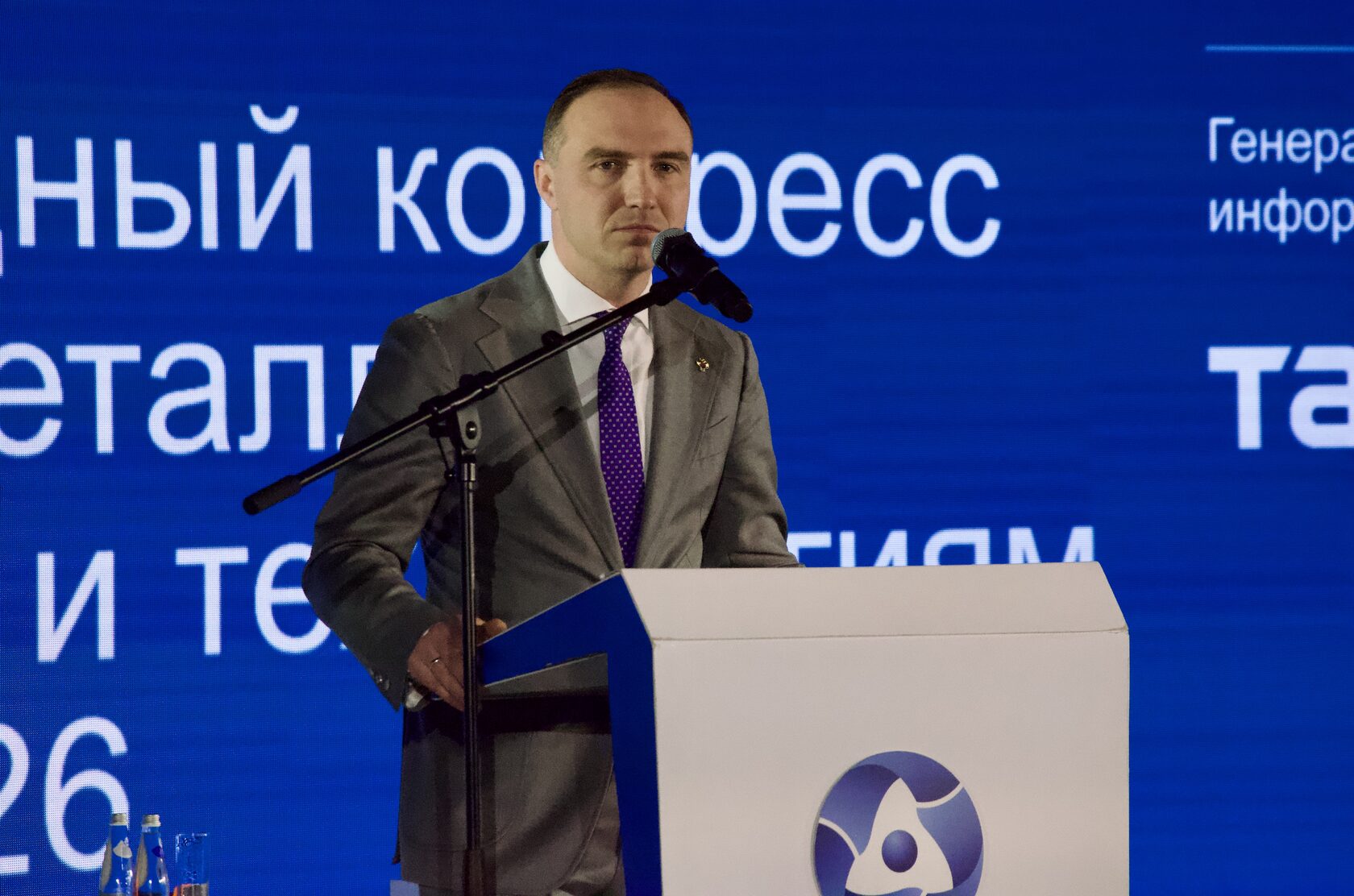
Mikhail Yurin, Deputy Minister of Industry and Trade of the Russian Federation, emphasized the importance of building complete technological chains:
«Today, the global market is undergoing a profound transformation. Logistics, production chains, approaches to technological sovereignty and international cooperation are all changing. Under these conditions, rare earth metals are becoming one of the key resources for global technological development. They are essential for the development of modern energy, microelectronics, aircraft manufacturing, electric transportation, unmanned systems, new materials, and many sectors, including the defense industrial complex. In essence, rare metals today are shaping the foundation of the new technological order. Russia possesses one of the world's largest mineral resource bases for rare and rare earth metals, with total explored reserves exceeding 28.5 million tons. It holds leading positions in the reserves of a number of critically important elements. We are actively developing extraction, processing, scientific expertise, and high-value-added projects. However, the issue today is not only about resources. The main challenge is to build sustainable technological and production chains and to create new models of international partnership and industrial cooperation. We are convinced that modern cooperation should not weaken but rather strengthen the technological sovereignty of countries, create new growth points, and ensure mutually beneficial development. That is why Russia is open to joint projects, from geological exploration and extraction to the creation of high-tech production facilities and the development of new materials. Today's Congress, RAREMET-2026, will serve as an important platform for open professional dialogue, experience exchange, and the launch of new initiatives».
«Today, the global market is undergoing a profound transformation. Logistics, production chains, approaches to technological sovereignty and international cooperation are all changing. Under these conditions, rare earth metals are becoming one of the key resources for global technological development. They are essential for the development of modern energy, microelectronics, aircraft manufacturing, electric transportation, unmanned systems, new materials, and many sectors, including the defense industrial complex. In essence, rare metals today are shaping the foundation of the new technological order. Russia possesses one of the world's largest mineral resource bases for rare and rare earth metals, with total explored reserves exceeding 28.5 million tons. It holds leading positions in the reserves of a number of critically important elements. We are actively developing extraction, processing, scientific expertise, and high-value-added projects. However, the issue today is not only about resources. The main challenge is to build sustainable technological and production chains and to create new models of international partnership and industrial cooperation. We are convinced that modern cooperation should not weaken but rather strengthen the technological sovereignty of countries, create new growth points, and ensure mutually beneficial development. That is why Russia is open to joint projects, from geological exploration and extraction to the creation of high-tech production facilities and the development of new materials. Today's Congress, RAREMET-2026, will serve as an important platform for open professional dialogue, experience exchange, and the launch of new initiatives».
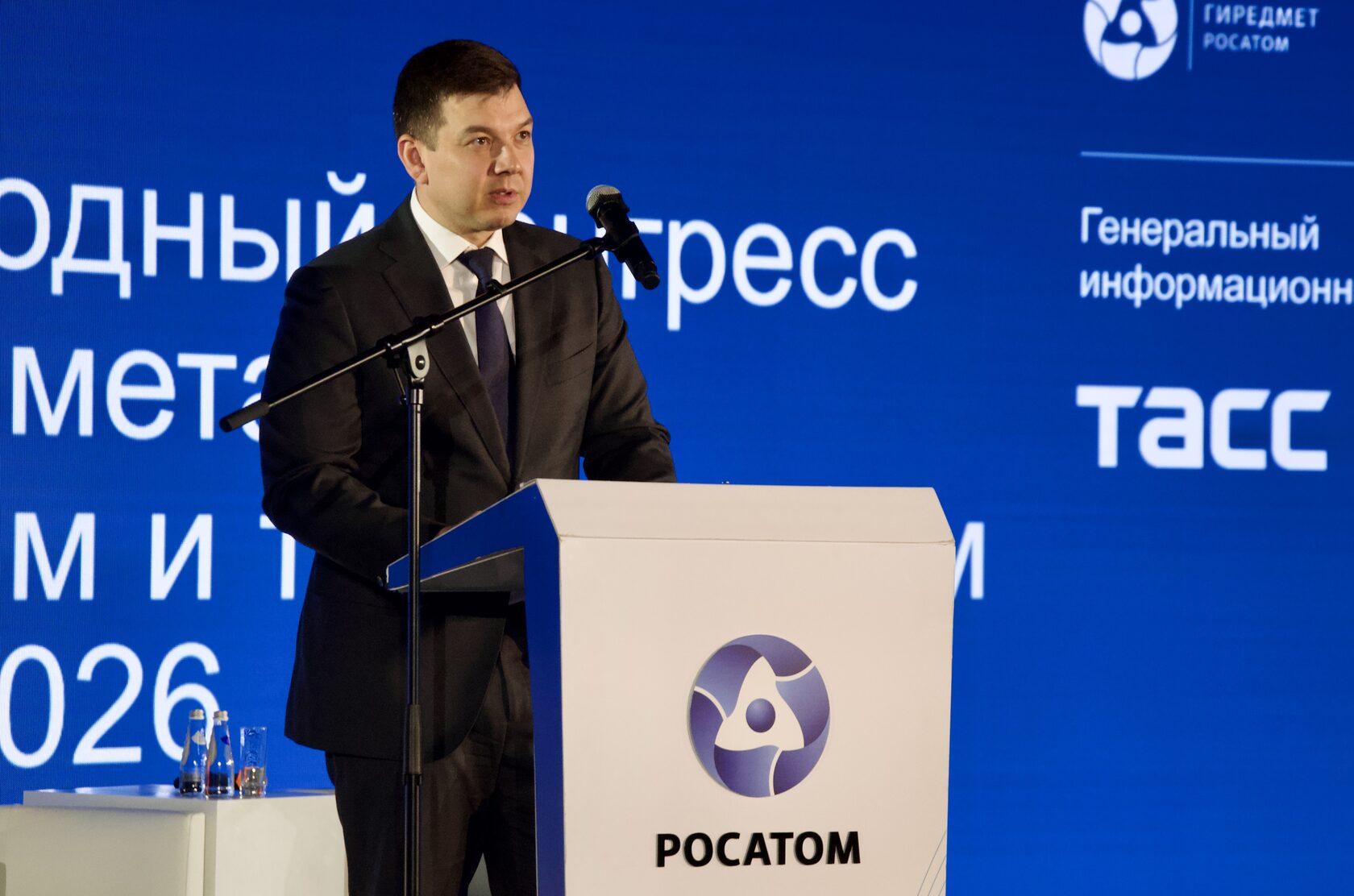
Andrey Shevchenko, Deputy Director General for Technological Development of Rosatom State Atomic Energy Corporation, thanked the Ministry of Industry and Trade of the Russian Federation for its support:
«As a follow-up to the remarks by Alexey Evgenievich Likhachev, Director General of Rosatom State Atomic Energy Corporation, I would like to add a few words. Rosatom State Atomic Energy Corporation has been working on the rare earths agenda since 2019, when an agreement was signed with the Government on the development of the high-tech field of new materials and substances. Over this time, we have traveled a long way together with our country. We have developed not only mining but also processing capacities and technological chains, and we have created and restored technologies. Throughout these years, we have actively worked with the Ministry of Industry and Trade, without whose support this journey would have been impossible. The Ministry has always been receptive to our proposals. The achievements that the Director General of Rosatom State Atomic Energy Corporation has spoken about were made possible thanks to the assistance of the Ministry of Industry and Trade. Therefore, I would like to express my immense gratitude for this support, and I am confident that our collaboration will continue further. I wish the participants of the International Congress success, fruitful work, and the achievement of new milestones».
«As a follow-up to the remarks by Alexey Evgenievich Likhachev, Director General of Rosatom State Atomic Energy Corporation, I would like to add a few words. Rosatom State Atomic Energy Corporation has been working on the rare earths agenda since 2019, when an agreement was signed with the Government on the development of the high-tech field of new materials and substances. Over this time, we have traveled a long way together with our country. We have developed not only mining but also processing capacities and technological chains, and we have created and restored technologies. Throughout these years, we have actively worked with the Ministry of Industry and Trade, without whose support this journey would have been impossible. The Ministry has always been receptive to our proposals. The achievements that the Director General of Rosatom State Atomic Energy Corporation has spoken about were made possible thanks to the assistance of the Ministry of Industry and Trade. Therefore, I would like to express my immense gratitude for this support, and I am confident that our collaboration will continue further. I wish the participants of the International Congress success, fruitful work, and the achievement of new milestones».
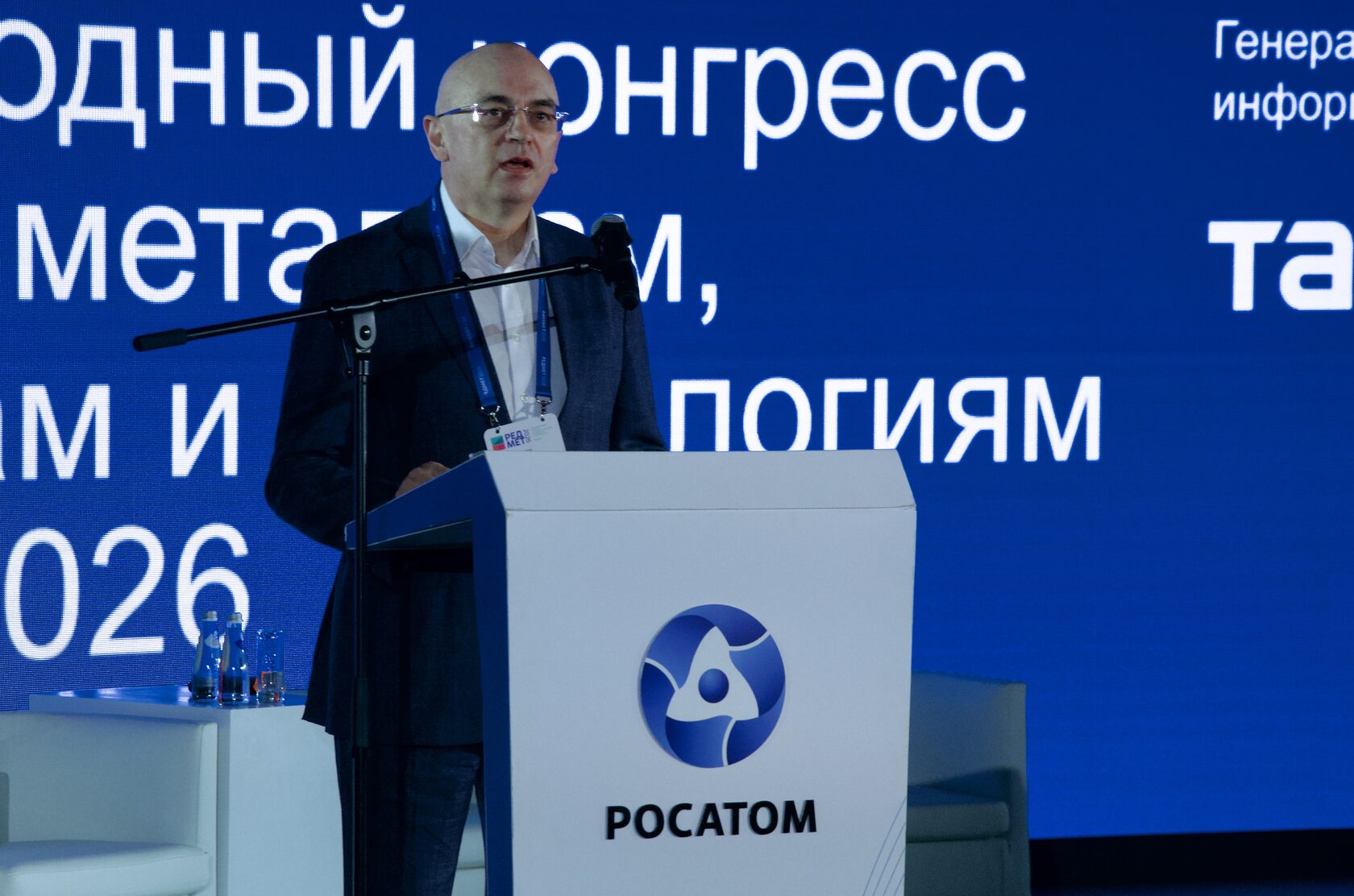
Vadim Medvedev, Director General of the National Technology Initiative (NTI) Foundation, spoke about systemic support measures for enterprises in the industry:
«Modern industry is no longer just about chemistry and metallurgy. Today, it is defined by big data, AI-based decision support systems, robotics, IoT, smart energy, and cybersecurity. And what unites them all is cross-cutting technologies. It is precisely with these technologies that the 25 NTI centers work, turning scientific ideas into industrial solutions. Unlike industry giants, the NTI Foundation specializes in building cross-cutting cooperation chains – and this is critically important for the development of the multi-stage rare earth metal chain. The NTI Foundation provides systemic support measures. It brings together science, business, and the state to achieve technological sovereignty. For example, two materials science centers based at Bauman Moscow State Technical University and Novosibirsk State University have established real cooperation with industry: over 170 intellectual property results have been created – accounting for 14.5% of the entire IP portfolio of the NTI competency centers. Partners and clients include Rosatom State Atomic Energy Corporation, Rostec, UEC (United Engine Corporation), Gazprom Neft, SIBUR, JSC NIIgrafit, Power Machines, and UEC-Aviadvigatel».
«Modern industry is no longer just about chemistry and metallurgy. Today, it is defined by big data, AI-based decision support systems, robotics, IoT, smart energy, and cybersecurity. And what unites them all is cross-cutting technologies. It is precisely with these technologies that the 25 NTI centers work, turning scientific ideas into industrial solutions. Unlike industry giants, the NTI Foundation specializes in building cross-cutting cooperation chains – and this is critically important for the development of the multi-stage rare earth metal chain. The NTI Foundation provides systemic support measures. It brings together science, business, and the state to achieve technological sovereignty. For example, two materials science centers based at Bauman Moscow State Technical University and Novosibirsk State University have established real cooperation with industry: over 170 intellectual property results have been created – accounting for 14.5% of the entire IP portfolio of the NTI competency centers. Partners and clients include Rosatom State Atomic Energy Corporation, Rostec, UEC (United Engine Corporation), Gazprom Neft, SIBUR, JSC NIIgrafit, Power Machines, and UEC-Aviadvigatel».
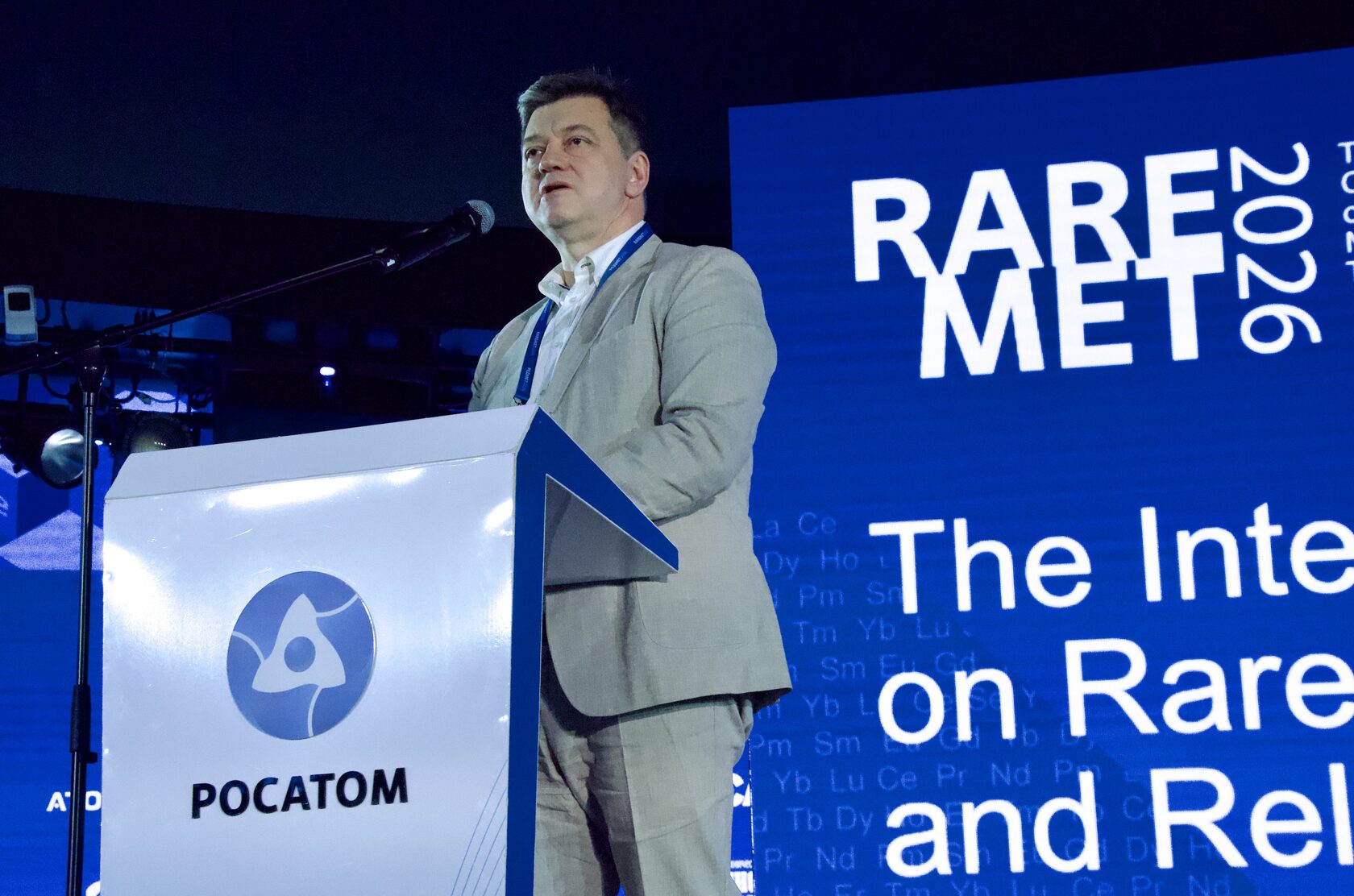
Valery Larin, Advisor to the Shareholder of the Kirillitsa Group of Companies (sponsor and co-organizer of the Congress), Doctor of Technical Sciences, and expert in the field of rare earth metals, emphasized the importance of creating complete technological chains:
«A detailed study of the mineralogy and chemical composition of the resource base of critical metals, as well as the development of advanced extraction and processing technologies, form the foundation for creating competitive projects in the industry. Today, it is important not simply to extract raw materials, but to build complete technological chains that produce end products demanded by the market. The Kirillitsa Group of Companies considers this area as one of its strategic priorities and is consistently developing competencies in processing technologies and industrial implementation of solutions. It is precisely this approach that can ensure high business performance and sustainable development of the industry».
«A detailed study of the mineralogy and chemical composition of the resource base of critical metals, as well as the development of advanced extraction and processing technologies, form the foundation for creating competitive projects in the industry. Today, it is important not simply to extract raw materials, but to build complete technological chains that produce end products demanded by the market. The Kirillitsa Group of Companies considers this area as one of its strategic priorities and is consistently developing competencies in processing technologies and industrial implementation of solutions. It is precisely this approach that can ensure high business performance and sustainable development of the industry».
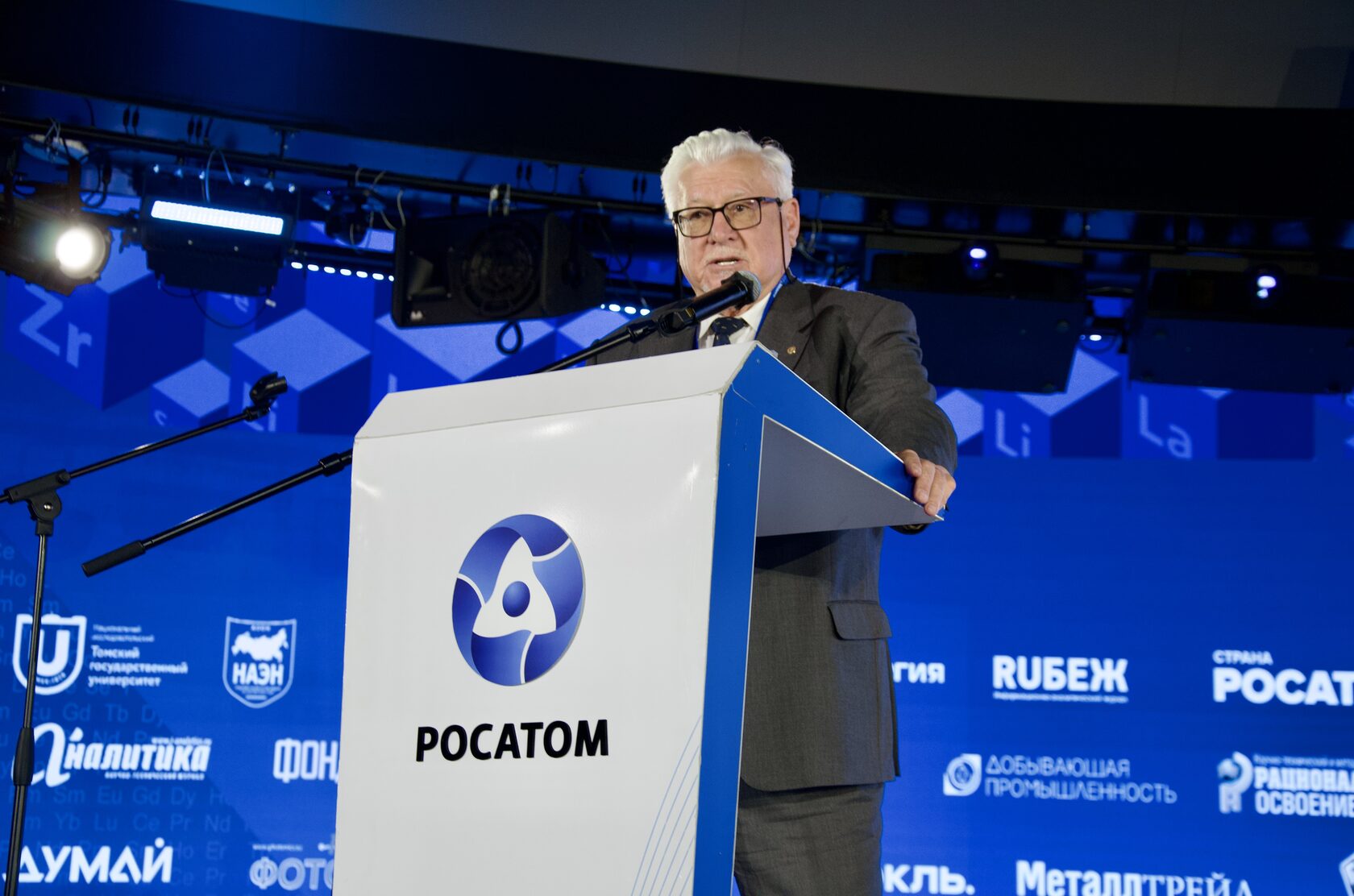
Ksenia Shoigu, Director General of the Mendeleev Valley Innovative Scientific and Technological Center Development Foundation (co-organizer of the Congress), spoke about the role of the Angara-Yenisei cluster in implementing the process of new industrialization:
«The President of the Russian Federation, Vladimir Vladimirovich Putin, has set the task of creating complete production and technological chains – from deposit development and deep processing to the production of high-tech products with high added value. For rare and rare earth metals, this is particularly important: their value is revealed not in raw material as such, but in high-value-added stages – in the materials created from them, in components and end products such as energy storage devices, electronics, robotics, medical and industrial equipment. Therefore, the key task today is to transform the industry's potential into viable project models with clear economics and investment attractiveness, with a pool of real partners, a system for technology creation, and personnel training. The project to create the Angara-Yenisei cluster for deep processing of non-ferrous, rare, and rare earth metals is a practical implementation of this approach and an integral part of the overall process of Russia's new industrialization».
«The President of the Russian Federation, Vladimir Vladimirovich Putin, has set the task of creating complete production and technological chains – from deposit development and deep processing to the production of high-tech products with high added value. For rare and rare earth metals, this is particularly important: their value is revealed not in raw material as such, but in high-value-added stages – in the materials created from them, in components and end products such as energy storage devices, electronics, robotics, medical and industrial equipment. Therefore, the key task today is to transform the industry's potential into viable project models with clear economics and investment attractiveness, with a pool of real partners, a system for technology creation, and personnel training. The project to create the Angara-Yenisei cluster for deep processing of non-ferrous, rare, and rare earth metals is a practical implementation of this approach and an integral part of the overall process of Russia's new industrialization».
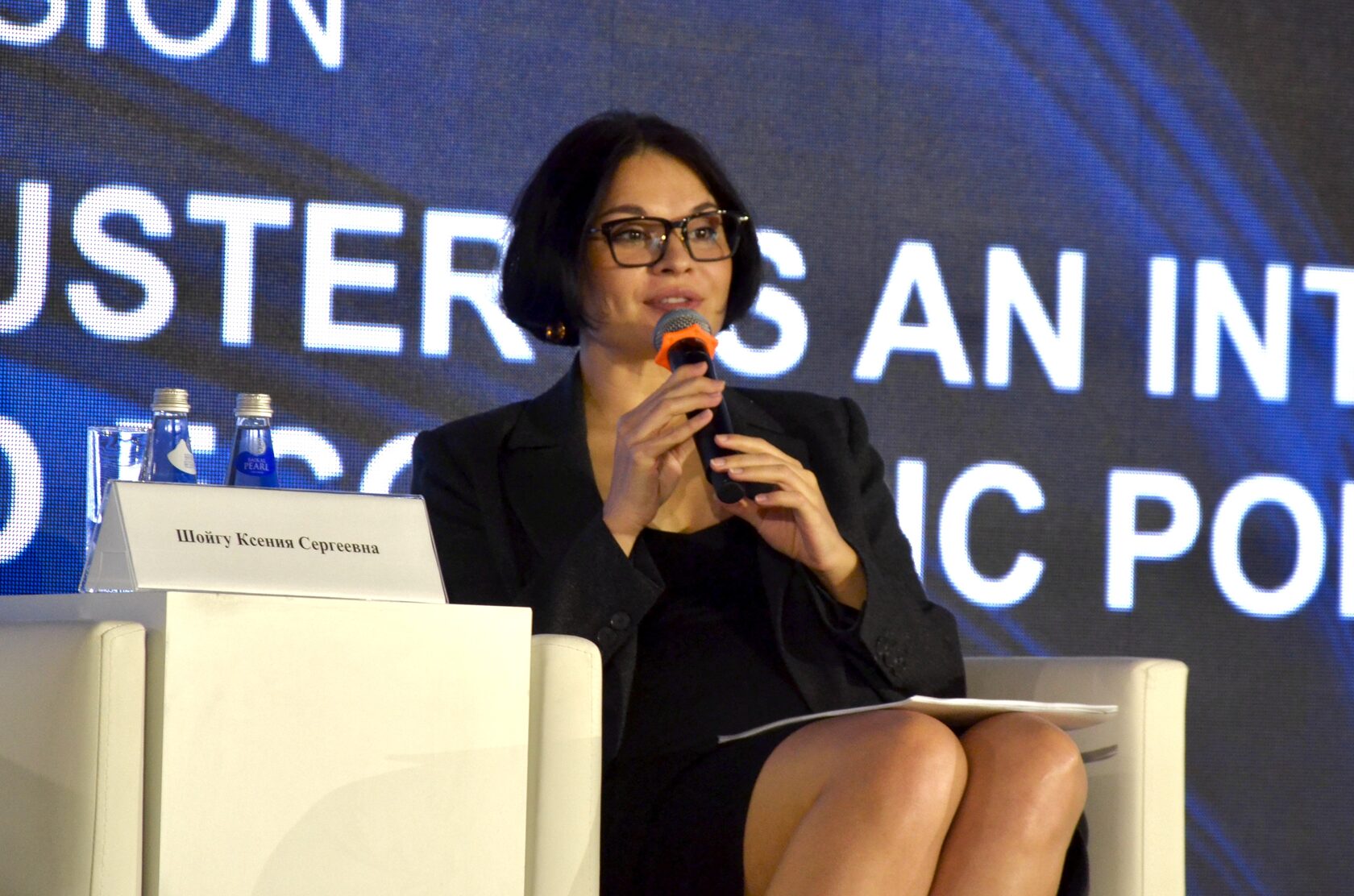
Alexander Sergeev, Scientific Director of the National Center for Physics and Mathematics (NCFM), Academician of the Russian Academy of Sciences, reminded of the importance of fundamental science:
«The future lies in materials that we will design using digital technologies and artificial intelligence. These should be not only efficient but also maximally environmentally friendly materials, ensuring the sustainable development of the economy and energy. We need close interaction between geophysicists, physicists, and mathematicians to create high-tech geotechnical materials; we must go beyond studying individual molecules and learn to observe the dynamics of complex systems on ultra-small time scales. The development of rare earth metal technologies begins with fundamental science. Modern methods of geophysics and physics are the foundation that allows us not only to find resources but also to set the standards for their application in the technologies of the future».
«The future lies in materials that we will design using digital technologies and artificial intelligence. These should be not only efficient but also maximally environmentally friendly materials, ensuring the sustainable development of the economy and energy. We need close interaction between geophysicists, physicists, and mathematicians to create high-tech geotechnical materials; we must go beyond studying individual molecules and learn to observe the dynamics of complex systems on ultra-small time scales. The development of rare earth metal technologies begins with fundamental science. Modern methods of geophysics and physics are the foundation that allows us not only to find resources but also to set the standards for their application in the technologies of the future».
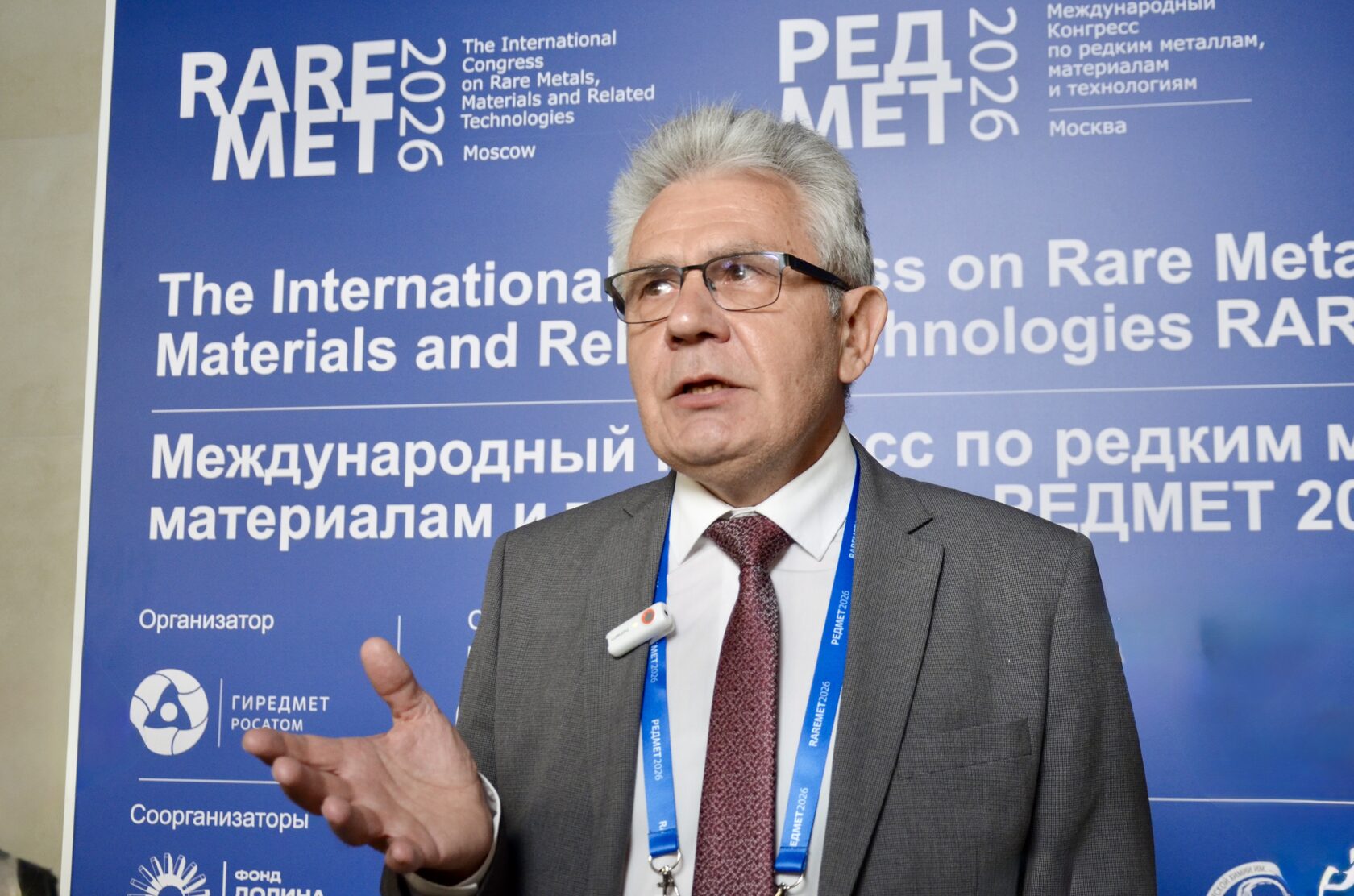
Evgeny Gusev, Commercial Director of Rosatom MetalTech LLC, presented a report on the Russian rare earth magnets consumption market and the growing demand for them, emphasizing that proprietary magnets are the basis of technological sovereignty in the backbone industries. Special attention was paid to the formation of large-scale production of neodymium-iron-boron (NdFeB) magnets in Russia. Magnets produced by Rosatom enterprises are supposed to be used in the production of wind turbines and integrated electric drives, as well as directed to meet the needs of Russian manufacturers. The localized production chain "from ore to product" will give an additional impetus to the development of the national rare earth industry and generate stable demand for elements such as neodymium, praseodymium, terbium and dysprosium.
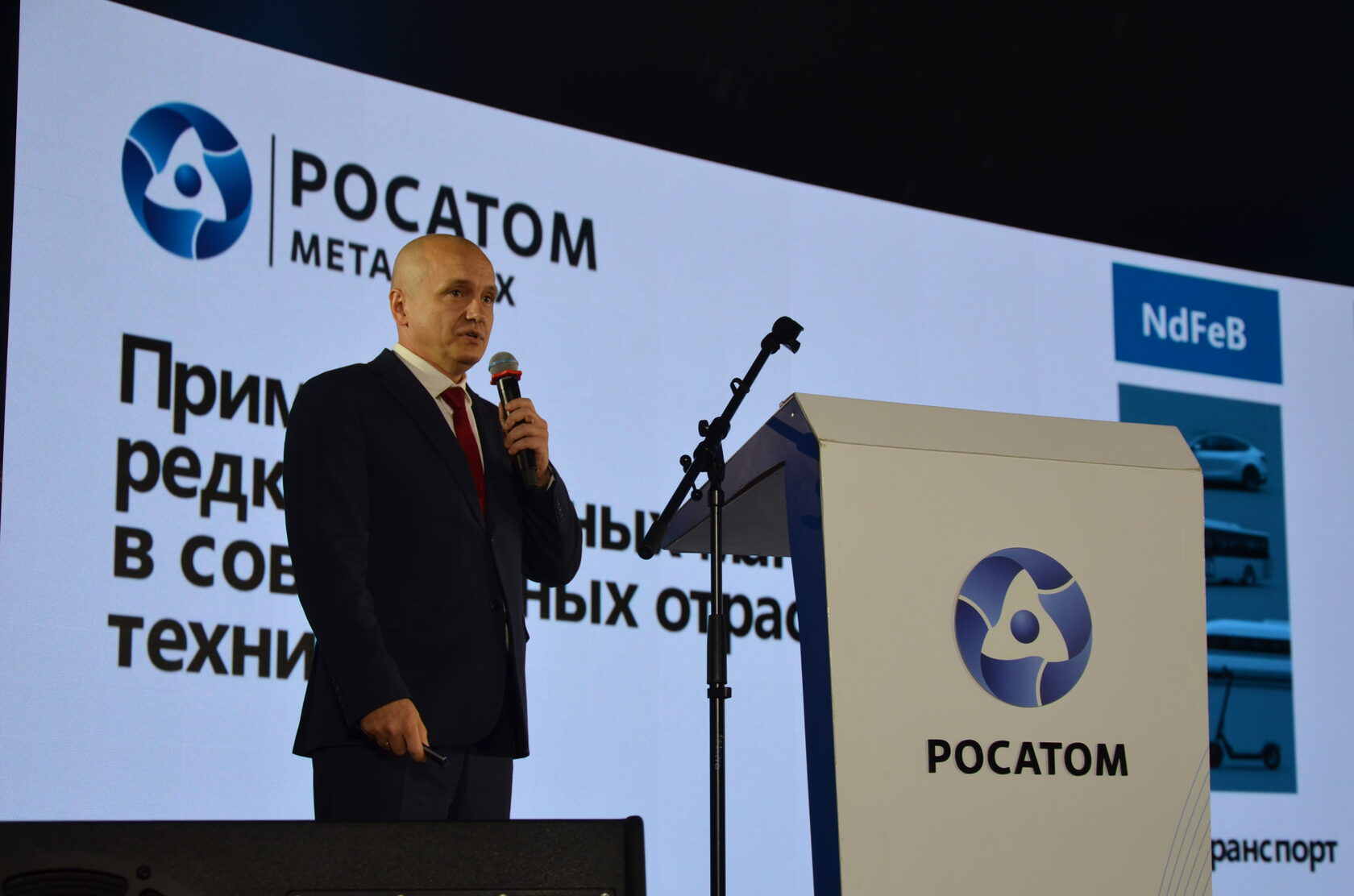
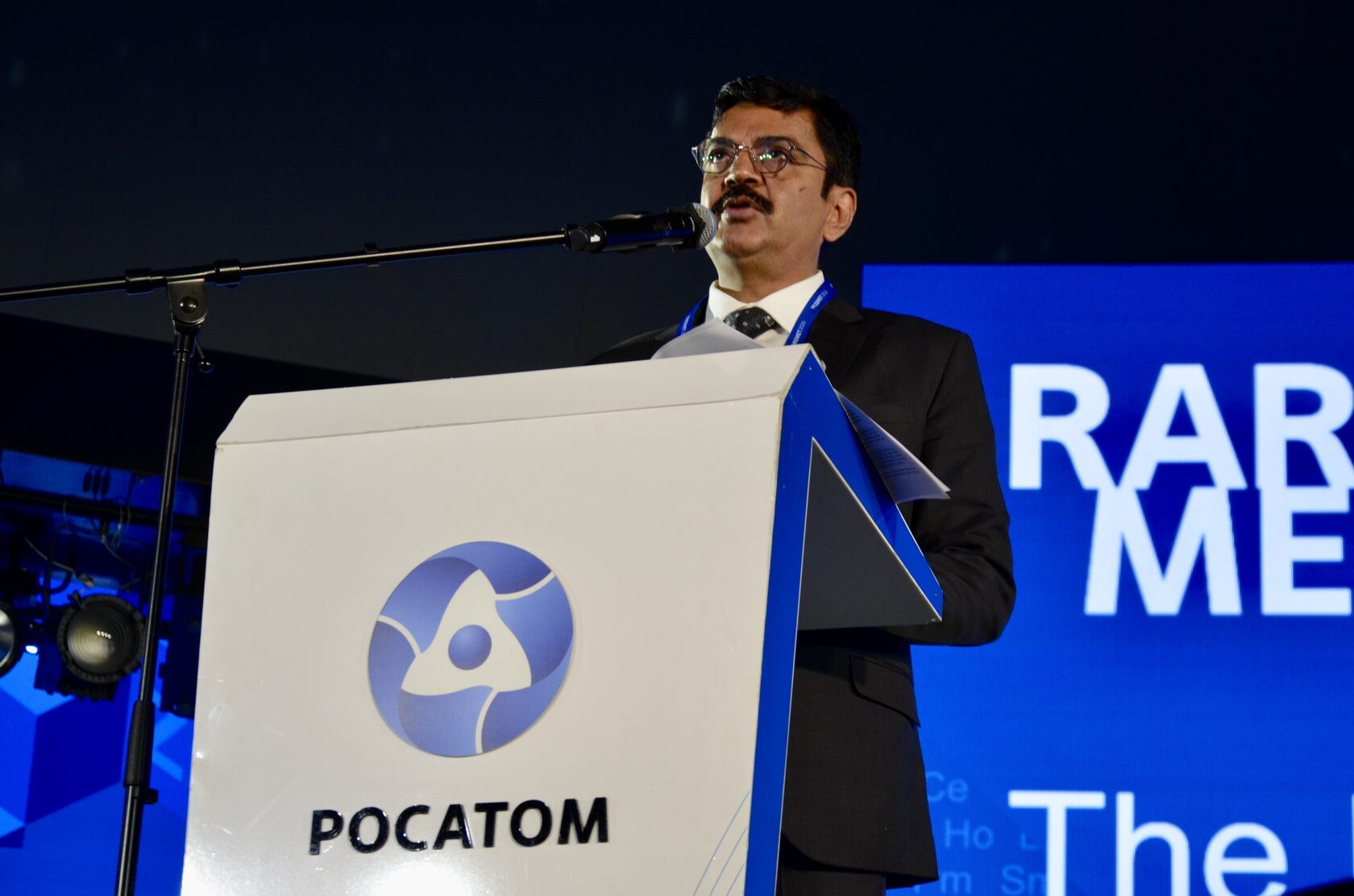
Mr. Sandeep Poundrik, Secretary of the Ministry of Steel of the Republic of India, called for closer cooperation between countries:
«I want to express my respect to the organizers of the Congress; this is an excellent platform for policymakers, scientific and industrial leaders. An important part of this Congress is the role of scientific and technological innovations. In India, we believe that international scientific cooperation should become deeper and broader, with a practical orientation being essential. Magnet production is the most important need today. I invite Russian academic institutes and research laboratories to collaborate with Indian academic institutes. Now is the time for cooperation with Russia and other partners. Our close ties are the foundation of stable and sustainable development. Thank you for inviting me to the Congress; I hope it achieves its stated goals».
«I want to express my respect to the organizers of the Congress; this is an excellent platform for policymakers, scientific and industrial leaders. An important part of this Congress is the role of scientific and technological innovations. In India, we believe that international scientific cooperation should become deeper and broader, with a practical orientation being essential. Magnet production is the most important need today. I invite Russian academic institutes and research laboratories to collaborate with Indian academic institutes. Now is the time for cooperation with Russia and other partners. Our close ties are the foundation of stable and sustainable development. Thank you for inviting me to the Congress; I hope it achieves its stated goals».
On the opening day, three international panel discussions took place, drawing full audiences. The first session was dedicated to the role of rare earth metals in the energy transition and sustainable development. The second discussion focused on the Angara-Yenisei cluster as an integration platform for Russia's new technological and economic policy. Participants in the third panel addressed the challenges of accelerating personnel training for the rare and rare earth metals industry.
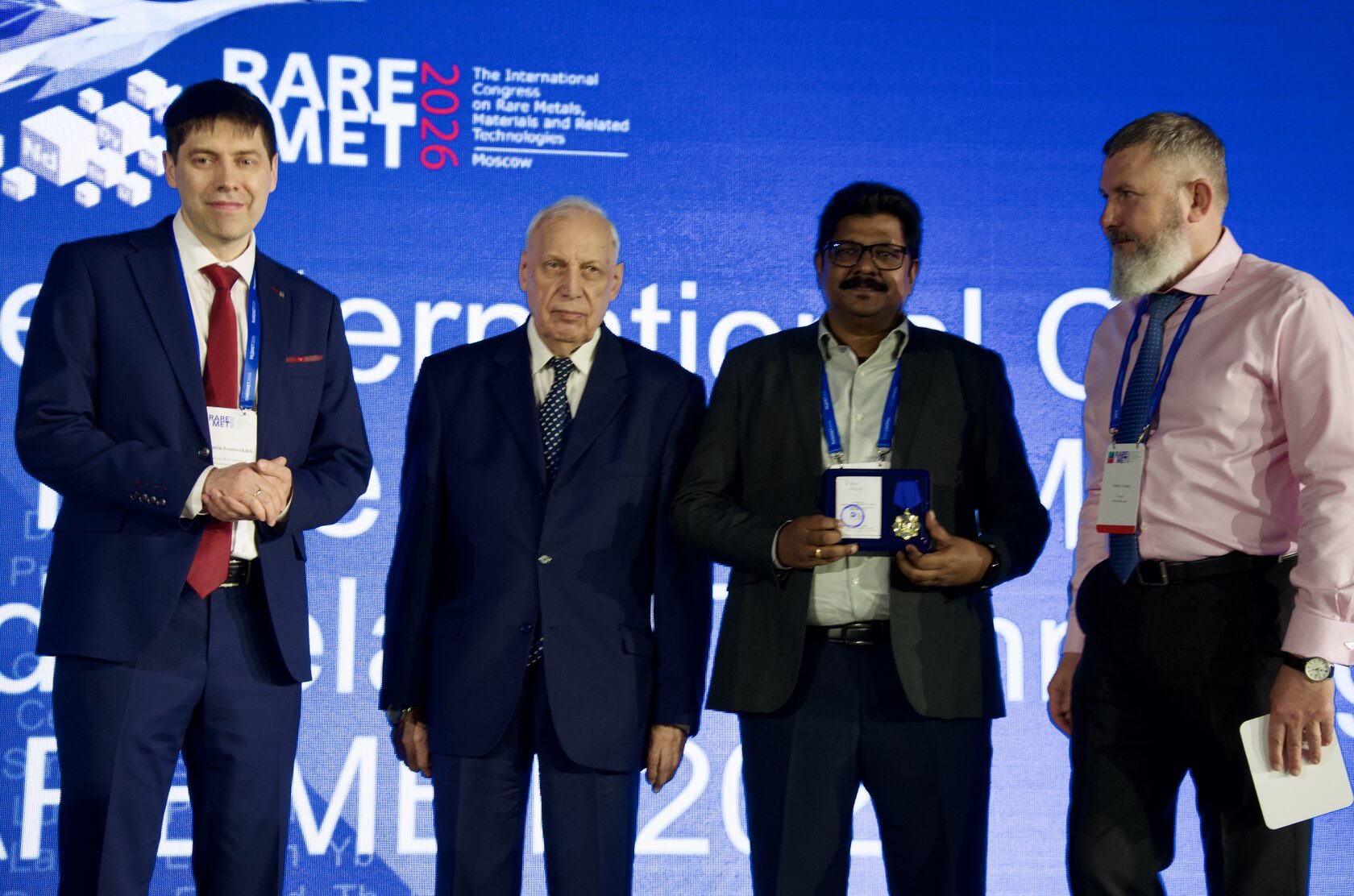
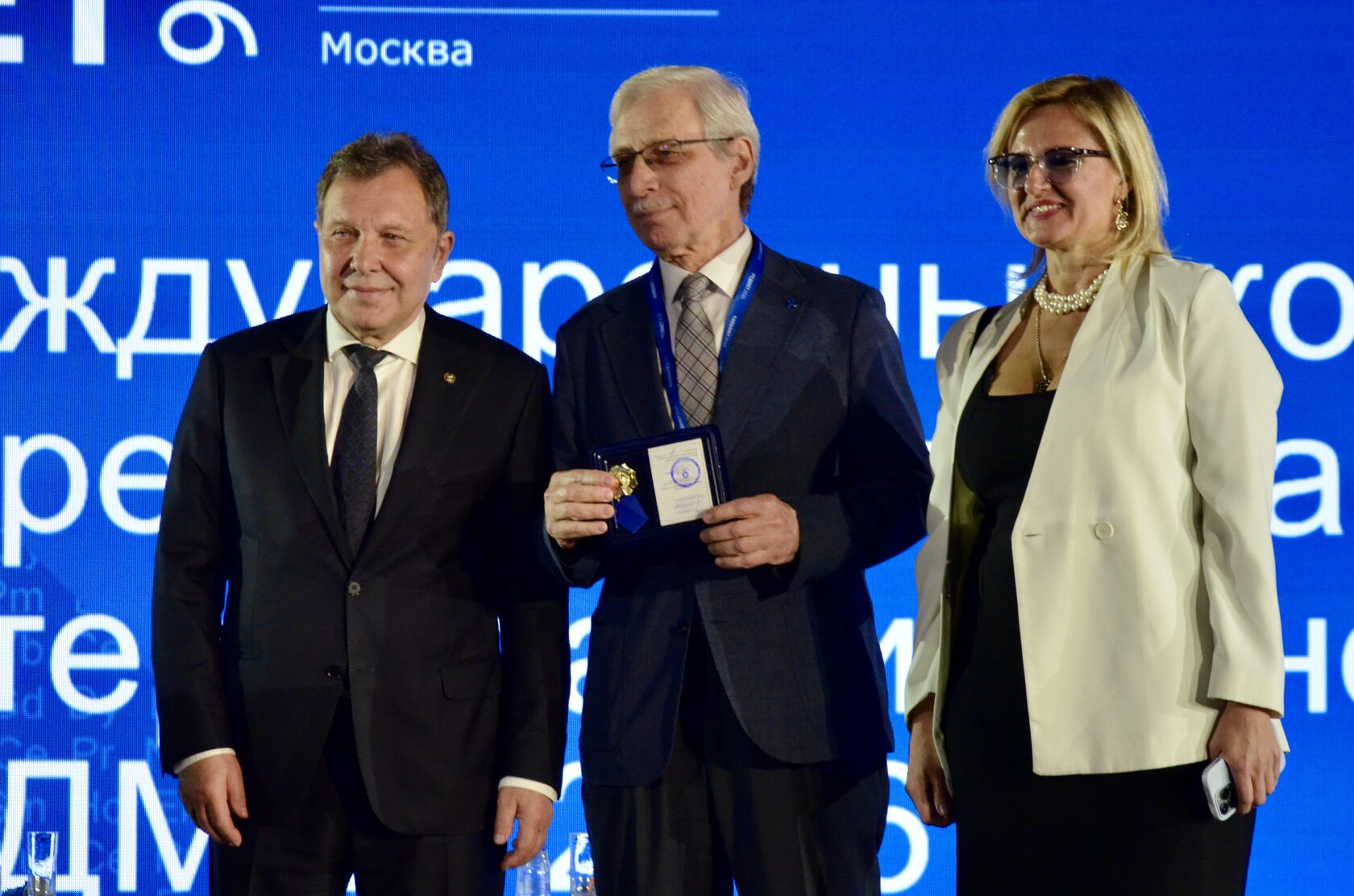
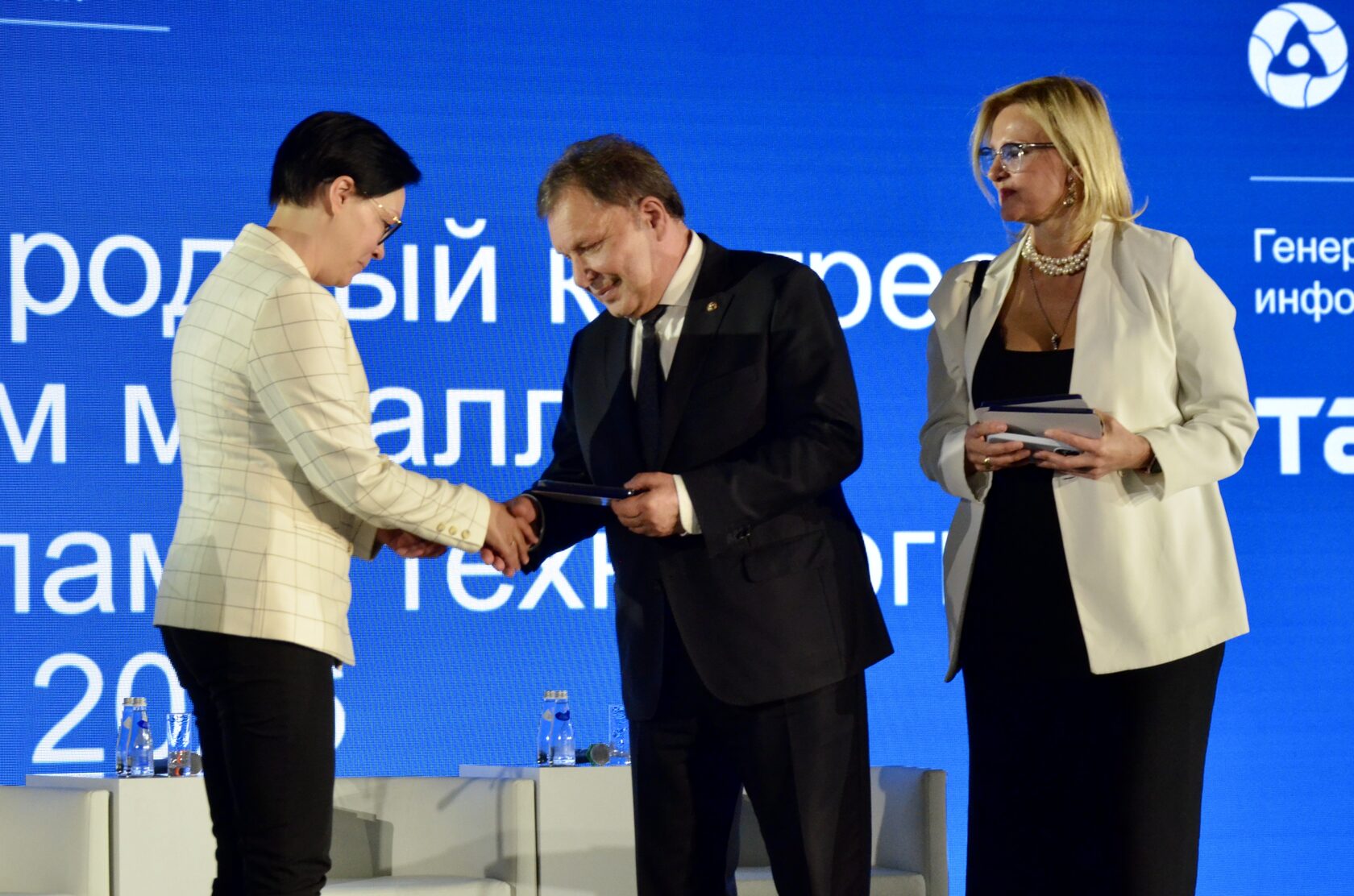
A key event of the first day was the awarding ceremony for the medals named after Academician N.P. Sazhin «For Contribution to the Development of Science and Technology in the Field of Rare and Rare Earth Metals». The award recipients were:
A key event of the first day was the awarding ceremony for the medals named after Academician N.P. Sazhin «For Contribution to the Development of Science and Technology in the Field of Rare and Rare Earth Metals». The award recipients were:
- Andrey Bulanov, Corresponding Member of the Russian Academy of Sciences (RAS);
- Andrey Voshkin, Corresponding Member of the RAS, Professor, Doctor of Technical Sciences;
- Liya Kogarko, Doctor of Geological and Mineralogical Sciences, Professor, Academician of the RAS;
- Stanislav Kudzh, Rector of MIREA – Russian Technological University;
- Dheeraj Kumar, Professor of Chemistry at the Indian Institute of Technology;
- Sanjay Kallie, Doctor of Sciences, CSIR Institute of Minerals and Materials Technology;
- Ruslan Khamizov, Corresponding Member of the RAS.
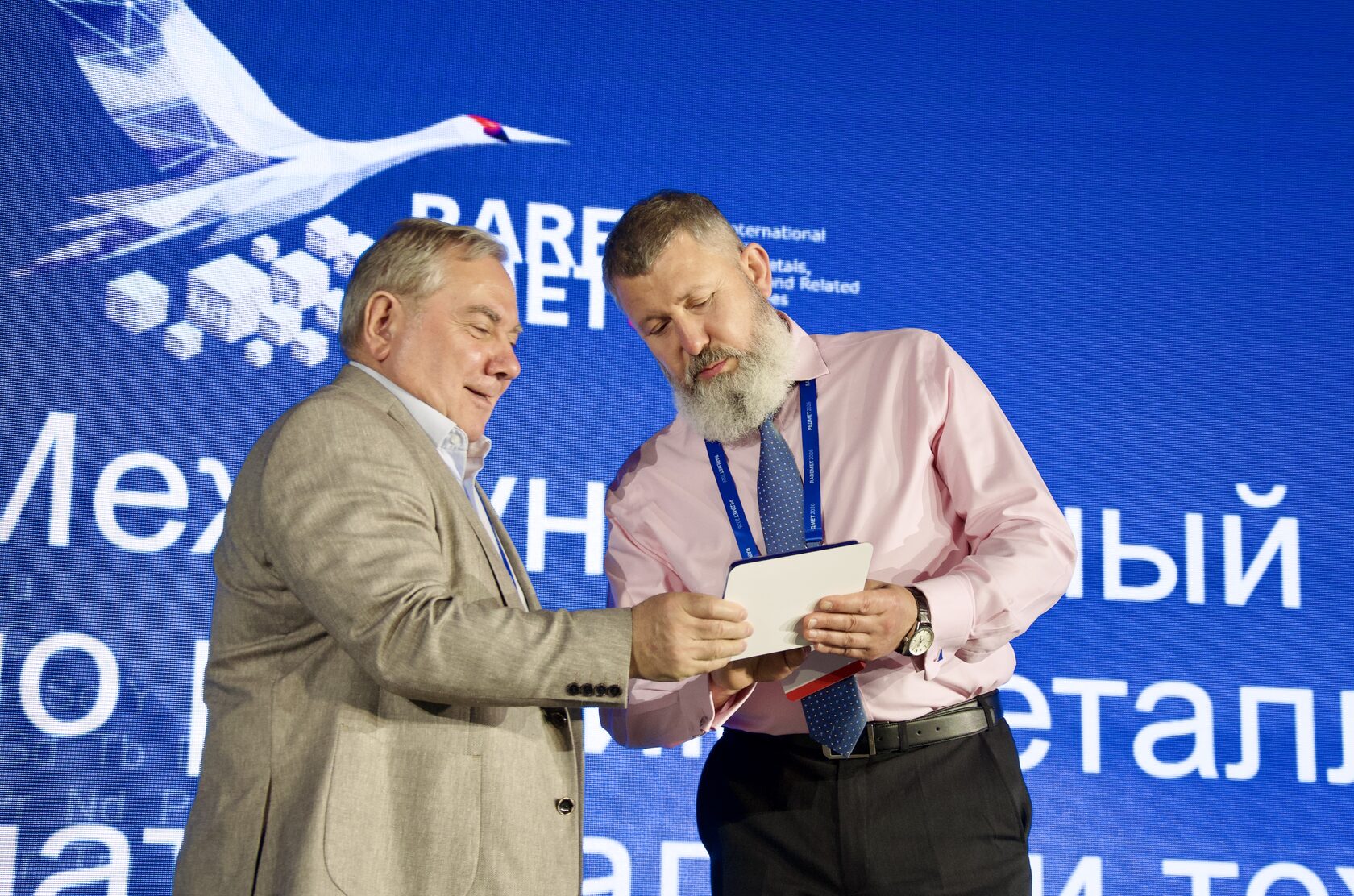
Medals named after Academician N.P. Sazhin were presented to representatives of the mass media by Yuri Mikhailov, Chairman of the Editorial Board of the journal “Rare Earths”, member of the Presidium of the Russian Academy of Sciences, Deputy Director General of JSC “SPETSKHIMIYA” of Rostec State Corporation, and Academician of the RAS. The recipients were:
- Oksana Galkevich, Deputy Director General of Public Television of Russia – for creating a series of educational programs on the subject of rare and rare earth metals;
- Aleksandras Budrys, correspondent for Forbes Russia – for creating a series of analytical publications on the subject of rare and rare earth metals;
- The journal «Prospecting and Conservation of Mineral Resources», represented by Alexander Rogozhin, member of the editorial board and First Deputy Director General of the Fedorovsky All-Russian Research Institute of Mineral Resources – for many years of scientific and journalistic work and in connection with the 95th anniversary of the publication.
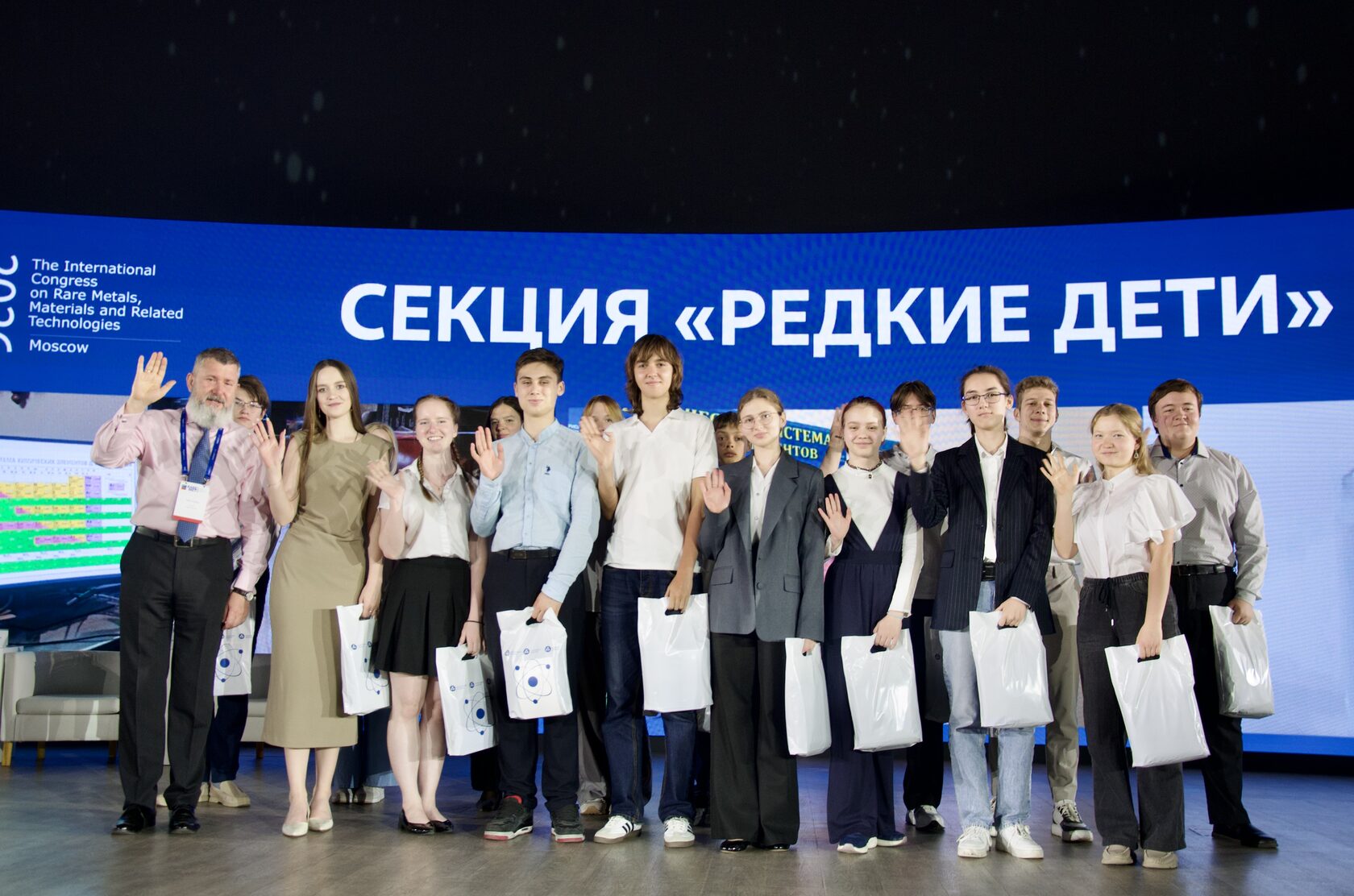
In addition, an awards ceremony was held for 17 high school students who took part in a popular science essay competition on the topic of rare earth metals, organized by the institute JSC Giredmet.
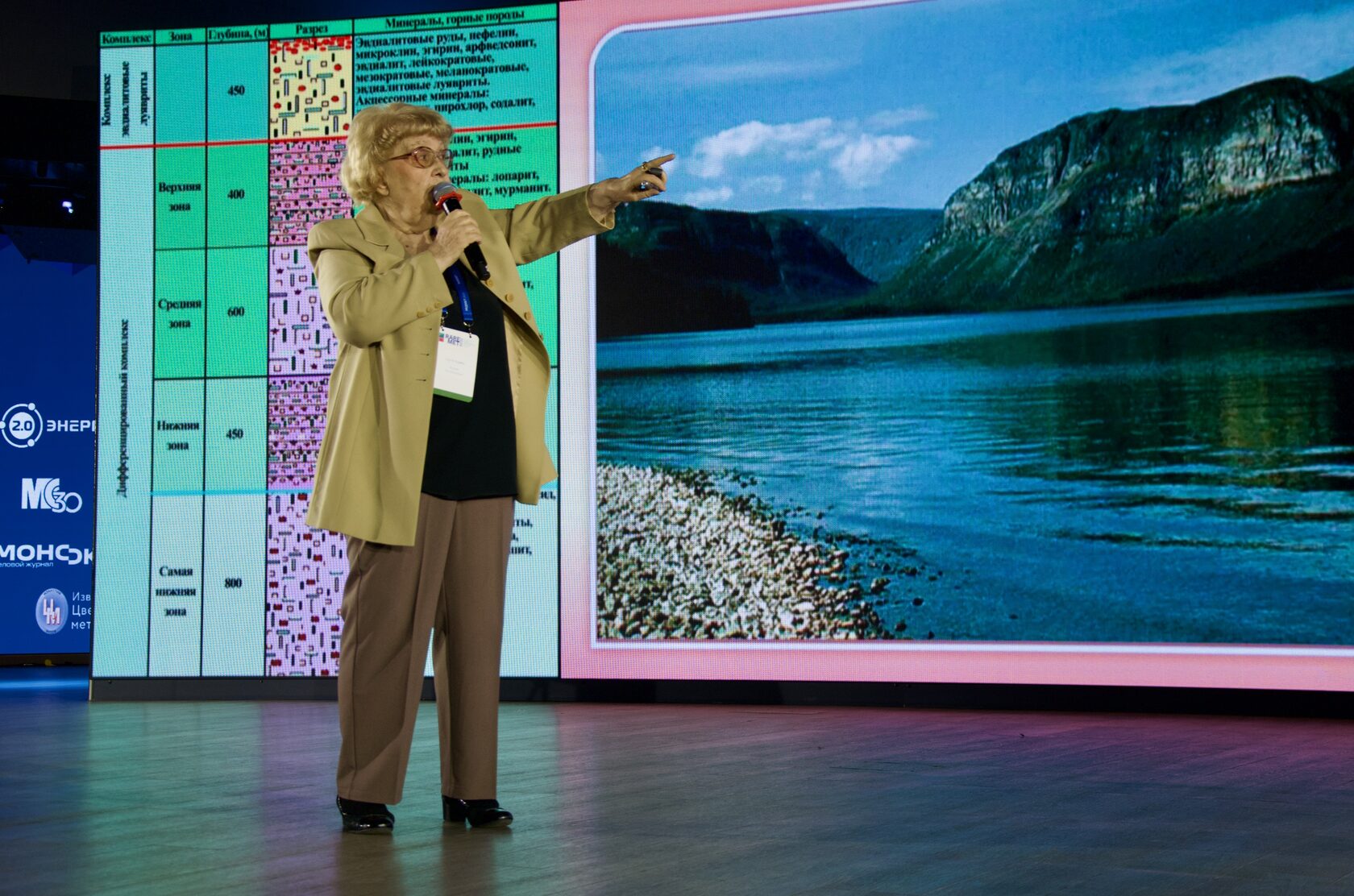
Today’s program was concluded with plenary reports on key scientific and technological directions.
On May 21 and 22, the Congress will continue its work across four parallel tracks covering the complete technological cycle – from raw material extraction to the production of high-tech products:
The program for the second and third days of the congress also includes panel discussions on «Materials and Components for High-Tech Industries. The Role of Digital Design and AI» and «The New Geography of Rare and Rare Earth Metals: Technological Sovereignty, Global Value Chains, and the Sixth Technological Order». Round tables will be held on synchrotron research of materials based on rare and rare earth metals, as well as an expert session on the economics of critical metals.
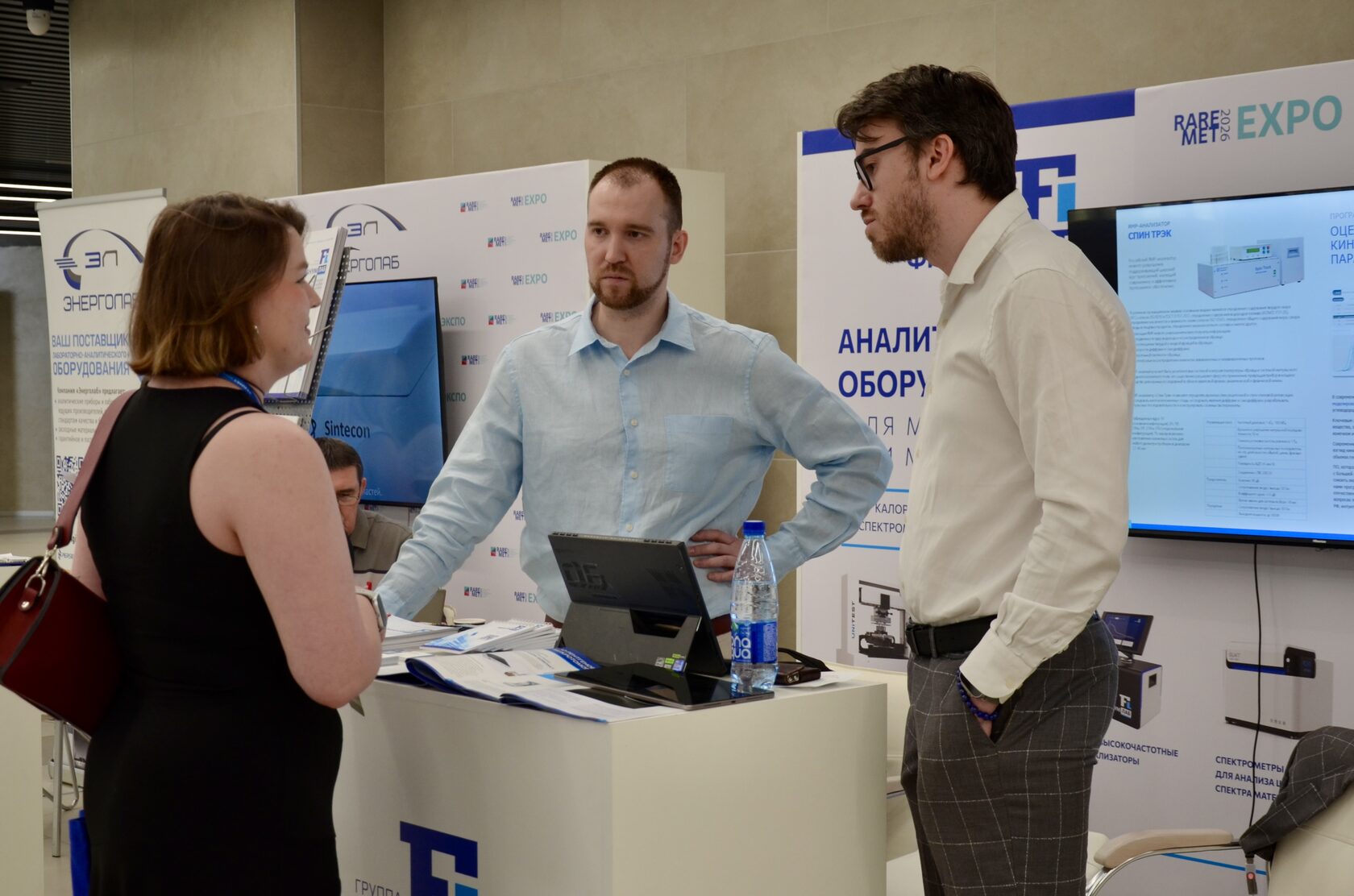
A specialized exhibition, RAREMET: Expo, is open for guests, demonstrating technologies, equipment, and services from leading companies and research centers.
- Mineral Resources of Rare Metals and Sustainable Processing Technologies (RAREMET:Minerals) – ore and technogenic waste processing, hydrometallurgy, digital twins of deposits.
- Metallurgy, Magnetic Materials, Powders, and Composite Materials (RAREMET:Metallurgy) – production of permanent magnets, additive technologies, refractory and rare metals.
- Chemistry and Technology of High-Purity Substances (RAREMET:Chemistry) – production and purification of rare metal compounds, extraction and sorption processes.
- Materials for Electronics, Optics, Photonics, and Energy (RAREMET:Functional) – semiconductors, scintillators, thermoelectrics, hydrogen energy.
The program for the second and third days of the congress also includes panel discussions on «Materials and Components for High-Tech Industries. The Role of Digital Design and AI» and «The New Geography of Rare and Rare Earth Metals: Technological Sovereignty, Global Value Chains, and the Sixth Technological Order». Round tables will be held on synchrotron research of materials based on rare and rare earth metals, as well as an expert session on the economics of critical metals.
A specialized exhibition, RAREMET: Expo, is open for guests, demonstrating technologies, equipment, and services from leading companies and research centers.
The closing of the Congress and the awards ceremony for the best speakers will take place on the evening of May 22.
Background Information:
Organizer of the Congress – JSC Giredmet (Scientific Division of Rosatom State Corporation).
Co-organizer and General Sponsor – Kirillitsa Group of Companies.
Sponsors: Rosatom MetallTech LLC, Rusredmet Group of Companies JSC.
Co-organizers: Mendeleev Valley INTC Development Foundation, RTU MIREA, D.I. Mendeleev University of Chemical Technology of Russia, Fedorovsky All-Russian Research Institute of Mineral Resources, Kurnakov Institute of General and Inorganic Chemistry of the RAS, Rare and Rare Earth Metals Association, Rare Earths Journal.
With the support of: Rosatom State Corporation, Ministry of Industry and Trade of the Russian Federation, Ministry of Natural Resources and Environment of the Russian Federation, Russian Academy of Sciences.
General Information Partner: TASS Federal News Agency.
General Industry Information Partner: Mining Industry Journal.
Partners: Tomsk State University, RAS Scientific Council on Chemical Technology, RAS Scientific Council on Inorganic Chemistry, National Subsoil Expertise Association, Subsoil Use of the 21st Century Journal, Country Rosatom Newspaper, Atomic Energy 2.0 Science and Business Portal, RUBEZH Information and Analytical Journal, Rational Subsoil Development Scientific and Technical Journal, Mining Industry Journal, Globus. Geology and Business Journal, Chemistry and Life Popular Science Journal, Metal Supply and Sales Specialized Journal, MetalTrade Information Publication, THINK Popular Science Journal, Photonics Scientific and Technical Journal, Techsovet Premium Information and Advertising Publication, Mining Science and Technology Journal, Proceedings of Higher Educational Institutions. Materials of Electronic Equipment Journal, Proceedings of Higher Educational Institutions. Powder Metallurgy and Functional Coatings Journal, Proceedings of Higher Educational Institutions. Non-Ferrous Metallurgy Journal, Proceedings of Higher Educational Institutions. Ferrous Metallurgy Journal, Industrial Economics Journal, Modern Electronic Materials Journal, Analytics Journal, Metal and Mineral Telegram Channel, National Technology Initiative Projects Support Foundation, Monocle Business Journal.
Background Information:
Organizer of the Congress – JSC Giredmet (Scientific Division of Rosatom State Corporation).
Co-organizer and General Sponsor – Kirillitsa Group of Companies.
Sponsors: Rosatom MetallTech LLC, Rusredmet Group of Companies JSC.
Co-organizers: Mendeleev Valley INTC Development Foundation, RTU MIREA, D.I. Mendeleev University of Chemical Technology of Russia, Fedorovsky All-Russian Research Institute of Mineral Resources, Kurnakov Institute of General and Inorganic Chemistry of the RAS, Rare and Rare Earth Metals Association, Rare Earths Journal.
With the support of: Rosatom State Corporation, Ministry of Industry and Trade of the Russian Federation, Ministry of Natural Resources and Environment of the Russian Federation, Russian Academy of Sciences.
General Information Partner: TASS Federal News Agency.
General Industry Information Partner: Mining Industry Journal.
Partners: Tomsk State University, RAS Scientific Council on Chemical Technology, RAS Scientific Council on Inorganic Chemistry, National Subsoil Expertise Association, Subsoil Use of the 21st Century Journal, Country Rosatom Newspaper, Atomic Energy 2.0 Science and Business Portal, RUBEZH Information and Analytical Journal, Rational Subsoil Development Scientific and Technical Journal, Mining Industry Journal, Globus. Geology and Business Journal, Chemistry and Life Popular Science Journal, Metal Supply and Sales Specialized Journal, MetalTrade Information Publication, THINK Popular Science Journal, Photonics Scientific and Technical Journal, Techsovet Premium Information and Advertising Publication, Mining Science and Technology Journal, Proceedings of Higher Educational Institutions. Materials of Electronic Equipment Journal, Proceedings of Higher Educational Institutions. Powder Metallurgy and Functional Coatings Journal, Proceedings of Higher Educational Institutions. Non-Ferrous Metallurgy Journal, Proceedings of Higher Educational Institutions. Ferrous Metallurgy Journal, Industrial Economics Journal, Modern Electronic Materials Journal, Analytics Journal, Metal and Mineral Telegram Channel, National Technology Initiative Projects Support Foundation, Monocle Business Journal.